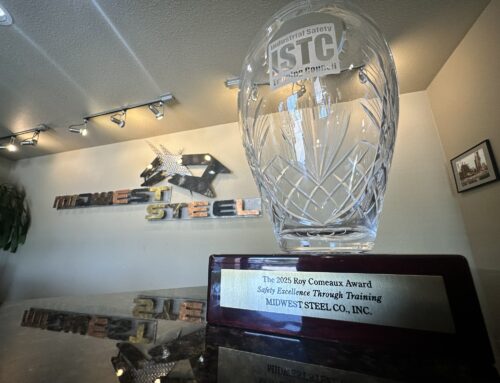
What does it really say about a contractor when an insurance safety audit comes back with zero findings and zero claims year after year? In high-risk industries like industrial dismantling and demolition, safety is not a talking point. It is the foundation on which everything else rests. A recent industrial safety audit conducted by Texas Mutual Insurance Company offered a detailed look at how our company approaches safety, risk management, and employee protection across its operations.
This article breaks down what an industrial safety audit evaluates, why it matters in steel dismantling work, and what this particular audit reveals about Midwest Steel’s safety culture. If you are a facility owner, project manager, or partner evaluating contractors, understanding these results helps you make informed decisions.
What Is an Industrial Safety Audit?
An industrial safety audit is a structured evaluation of a company’s safety programs, training procedures, and risk controls as they relate to real-world jobsite hazards. The goal is not just compliance, but verification that safety systems actually work in practice.
In industries involving demolition, rigging, crane operations, and material handling, safety audits focus on how hazards are identified, communicated, and controlled before incidents occur. For us, this audit reviewed operations tied to industrial dismantling at petrochemical facilities, equipment removal, used equipment resale, and metal recycling.
The audit was conducted onsite at the company’s Houston facility and included a review of safety policies, training methods, and historical performance.
How Does an Industrial Safety Audit Work?
An industrial safety audit typically evaluates both documentation and day-to-day practices. In this case, Texas Mutual’s review focused on operational consistency and hazard exposure rather than uncovering deficiencies.
First, the auditor reviewed Midwest Steel’s scope of operations to confirm no changes had occurred that could introduce new risks. This matters because safety programs must evolve alongside operational changes.
Next, the discussion centered on common hazards in industrial dismantling. These included working at heights, crane and rigging activities, heavy equipment operation, demolition tasks, and material handling. Each of these introduces potential fall hazards, struck-by risks, caught-between exposures, ergonomic strain, and dust or debris exposure.
The audit also evaluated how we mitigate those risks through new-hire orientation, ongoing training, job safety analyses, and routine safety program updates. Because a full onsite hazard assessment had already been completed earlier in the policy year, the focus remained on consistency and effectiveness rather than duplication.
Safety Hazards in Industrial Dismantling Operations
Industrial dismantling work carries inherent risks that cannot be eliminated entirely. What matters is how consistently those risks are managed. Petrochemical facilities, in particular, require heightened attention to planning, communication, and coordination.
Working at heights remains one of the most significant risk factors in dismantling projects. Fall protection training, equipment inspection, and proper rigging procedures are critical safeguards. Crane and rigging operations also introduce struck-by and load-control risks, especially when removing heavy industrial equipment.
Heavy equipment use and material handling increase exposure to caught-between incidents and ergonomic strain. Demolition activities add the potential for falling debris and airborne dust. An effective industrial safety audit looks at how often these hazards are encountered and how well workers are prepared to address them.
The audit confirmed that Midwest Steel addresses these challenges through consistent training, routine use of job safety analyses, and continuous improvement of safety programs.
Accident Trends and What Zero Claims Really Mean
One of the strongest indicators of a functioning safety program is long-term performance. According to the audit findings, Our team recorded zero claims during the current policy year and the three previous policy years. That means no reported incidents and no associated claim costs over four consecutive years.
This is particularly notable when compared to industry benchmarks. Midwest Steel participates in the Texas Construction Safety Group, which averaged 0.8 claims in 2024 with an average incurred cost of over $17,000. Common causes of incidents within the group included slips and falls, strains, struck-by events, and cuts.
Against that backdrop, a zero-claim history stands out. It suggests hazards are being addressed before they turn into incidents, not after.
Why Industrial Safety Audits Matter for Clients and Partners
For clients hiring an industrial dismantling contractor, an industrial safety audit offers valuable insight beyond marketing claims. It provides third-party validation that safety programs are effective, current, and actively used.
Strong audit results reduce project risk. Fewer incidents mean fewer delays, less downtime, and a safer environment for everyone on site. For petrochemical facilities, where safety failures can have serious consequences, partnering with a contractor that demonstrates consistent hazard control is essential.
Insurance audits also reflect how a company is viewed by underwriters and safety professionals. When no recommendations or corrective actions are issued, it indicates confidence in the contractor’s safety management systems.
Benefits of a Proactive Industrial Safety Program
A well-run safety program benefits more than just compliance metrics. It protects workers, improves operational efficiency, and strengthens trust with clients.
Employees who receive regular training and clear expectations are better prepared to identify hazards and stop unsafe work. Consistent use of job safety analyses ensures tasks are planned instead of rushed. Over time, these practices reduce wear and tear on both people and equipment.
From a business standpoint, strong safety performance supports long-term stability. Zero claims help control insurance costs and demonstrate reliability to facility owners and project managers evaluating bids.
What the Audit Did Not Find
One of the most telling aspects of this industrial safety audit is what it did not include. No suggestions. No recommendations. No follow-up visits scheduled for the remainder of the policy year.
That outcome reflects proactive safety efforts rather than reactive fixes. It indicates systems are already in place and functioning as intended. In high-risk sectors like industrial dismantling, that level of consistency is earned through daily discipline, not paperwork alone.
Frequently Asked Questions About Industrial Safety Audits
Is an industrial safety audit the same as an OSHA inspection?
No. An industrial safety audit is typically conducted by an insurer or third-party consultant and focuses on risk management and program effectiveness rather than regulatory enforcement.
How often should industrial safety audits be conducted?
Many insurers perform annual or policy-year audits, with additional assessments if operations change or new hazards are introduced.
Do zero claims guarantee a safe operation?
While no metric is perfect, a multi-year zero-claim record strongly suggests hazards are being identified and managed before incidents occur.
Safety That Shows Up on Every Job
An industrial safety audit is more than a checkbox. It is a snapshot of how a company operates when no one is watching. The recent Texas Mutual audit confirmed that Midwest Steel’s safety programs are not theoretical. They are active, consistent, and effective across complex dismantling and demolition operations.
For clients seeking a contractor who prioritizes planning, training, and hazard control, these results matter. They reflect a culture where safety supports productivity instead of slowing it down.
To learn more about our safety-focused approach, explore our online resources, or reach out to discuss an upcoming project.
Ready to experience the Midwest Steel difference
Contact us today to learn more about our demolition services or to discuss your next project.